

I arrived very early for my flight from London to Venice. They had rebooked me twice and my plans were muddled. I was supposed to fly at 6 am, so I’d booked accommodation near the airport for the previous night. Then, after Not-so-Easyjet’s second passenger juggle, I was to leave at 6 pm instead* Cancelling the airport hotel, I stayed an extra night in central London. (*Note to self: In future, when pressing the online “confirm booking” button expect to be only penciled in for that flight).
Still, I was at the airport 5 hours early, partly because I hadn’t made plans for my extra time in London, partly because the trains were on strike making my journey time to Gatwick unpredictable, and partly because once I arrived, the 6 pm flight was delayed for 2 hours. Essentially, I’d been flight-ready for most of the day.
At 11 pm local time I finally climbed on a bus from Marco Polo Airport to Piazzale Roma, Venezia. Luckily, the very modest hotel I had booked on travel points, although it lacked air conditioning and working WIFI anywhere but in the lobby, was only a 3-minute walk from the Piazzale Roma bus station, a 5-minute walk to the railway station and it included breakfast. After a good night’s sleep and filled with breakfast, I’d forgotten yesterday’s delays and set out to tackle the labyrinth of lanes between my hotel and Piazza San Marco. Yes, I could have just taken a vaporetto (water bus) but apparently slow travel is my thing and anyway, I wanted to properly see the city.
So I walked with the thousands of others, shoulder-to-shoulder, through the narrow lanes with my nose, like many others, buried in my phone and looking, not at the city, but at the little Google walking man and his shadow as I walked to the city centre. I’d plotted the route but put my phone on airplane mode so I needed to keep the Google man on track. Every now and then I would stop and look up and see others like me, turning full circle on the spot while watching Google man’s shadow to make sure they were heading in the right direction. As I neared Piazza San Marco the more crowded it became. Quickly it became impossible to take photos in the narrow streets choked with tourists so I pointed my camera to the canals. They too were bustling.
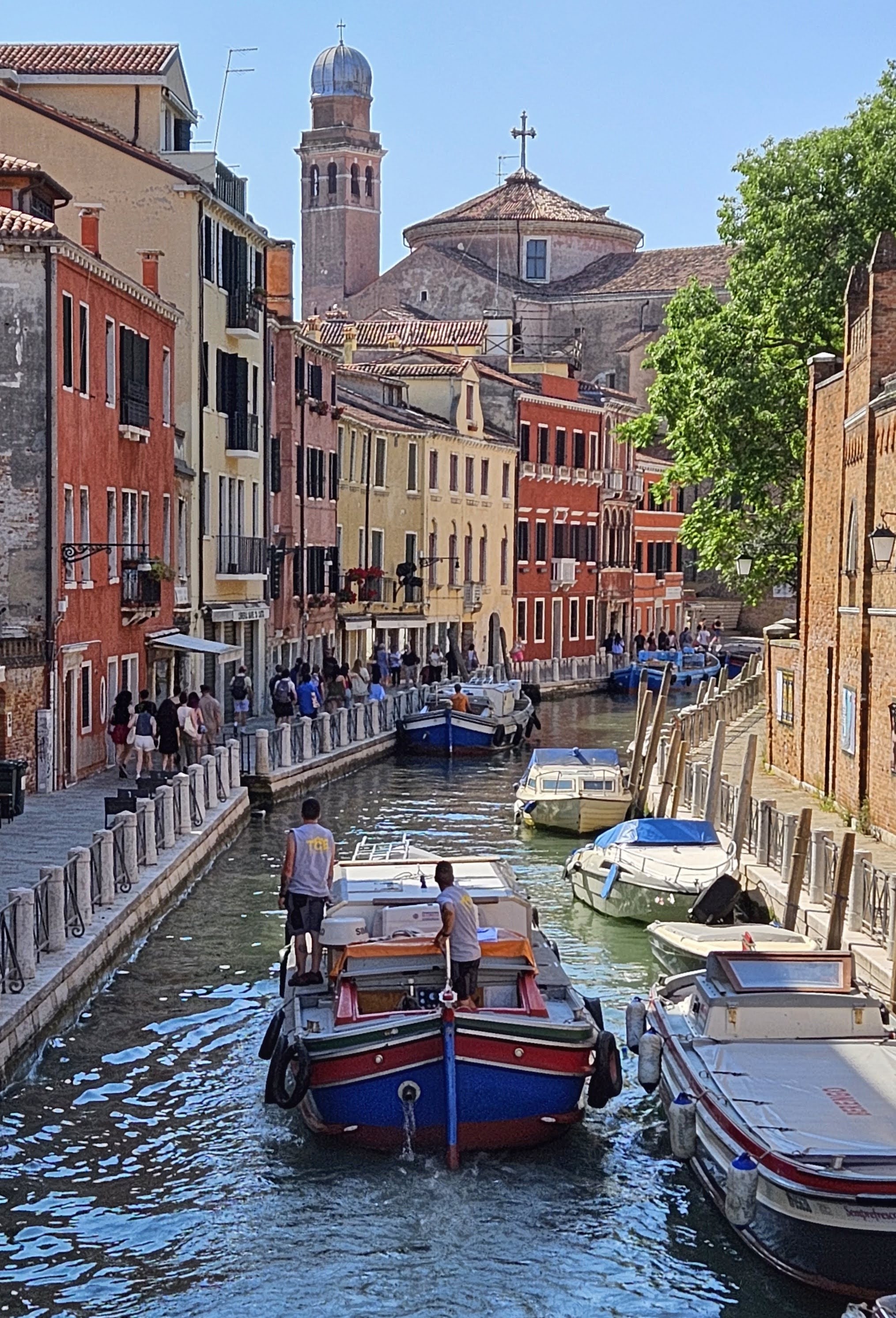

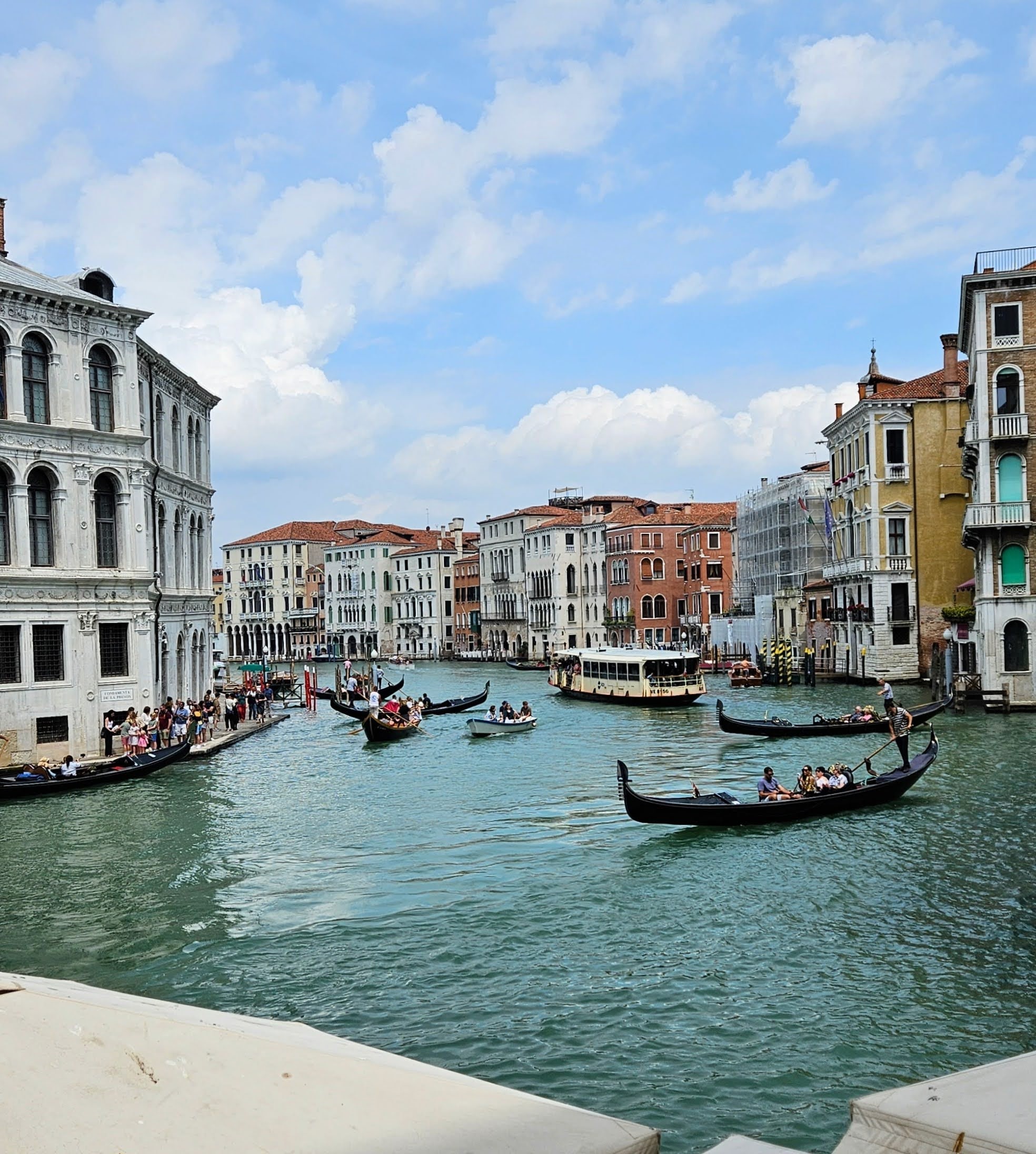
Closer to where I was staying things thankfully, were quieter.
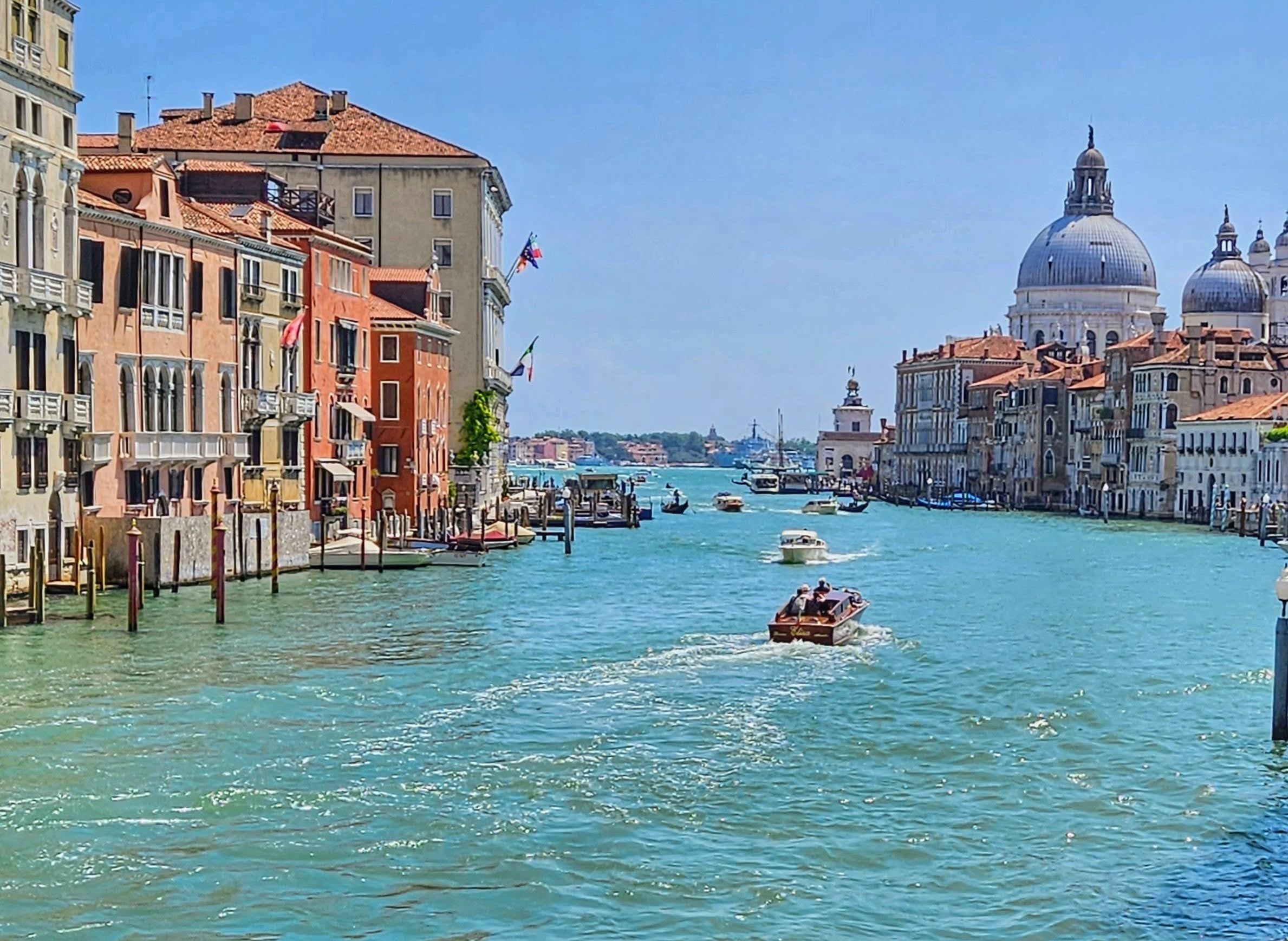

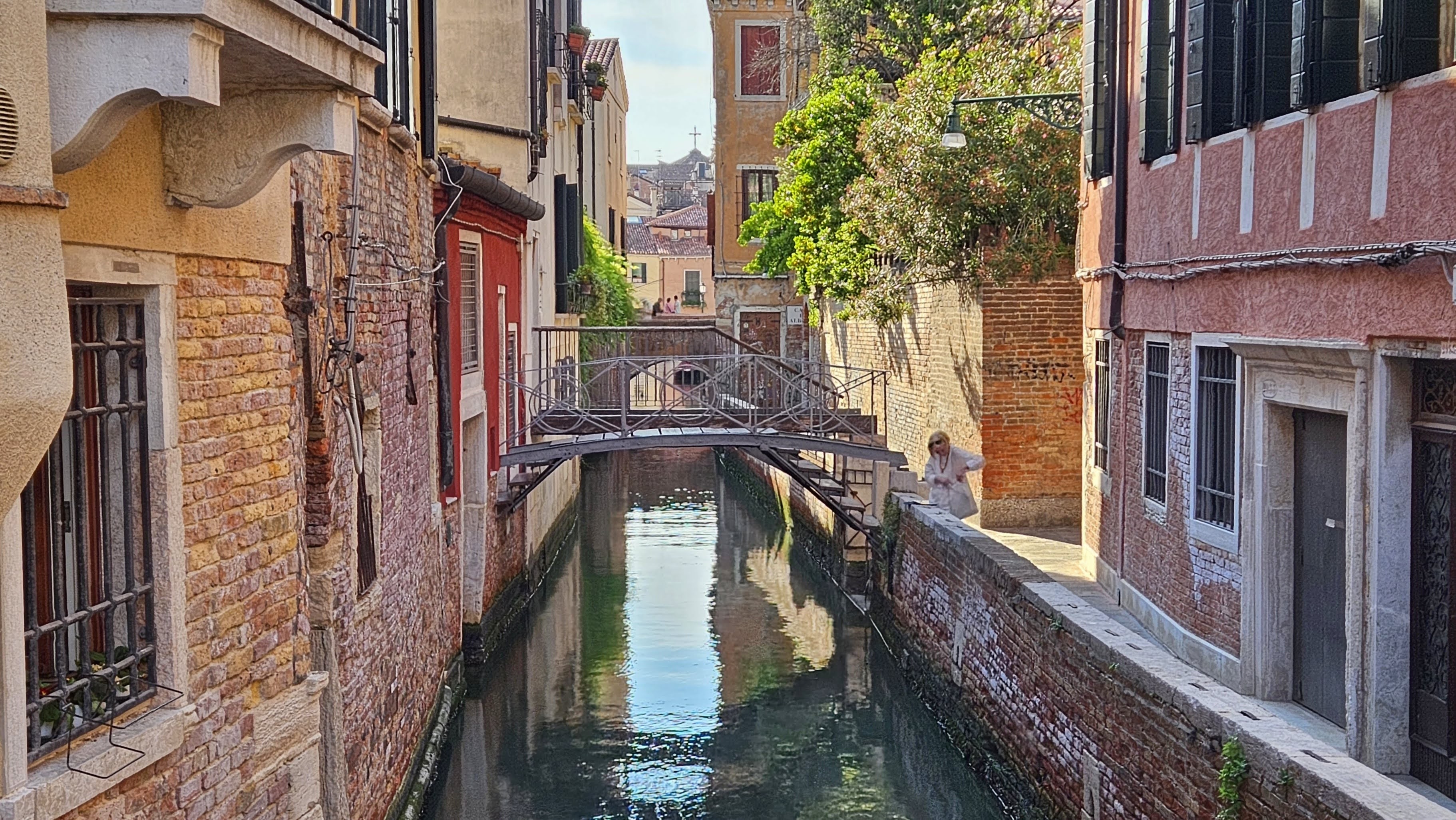
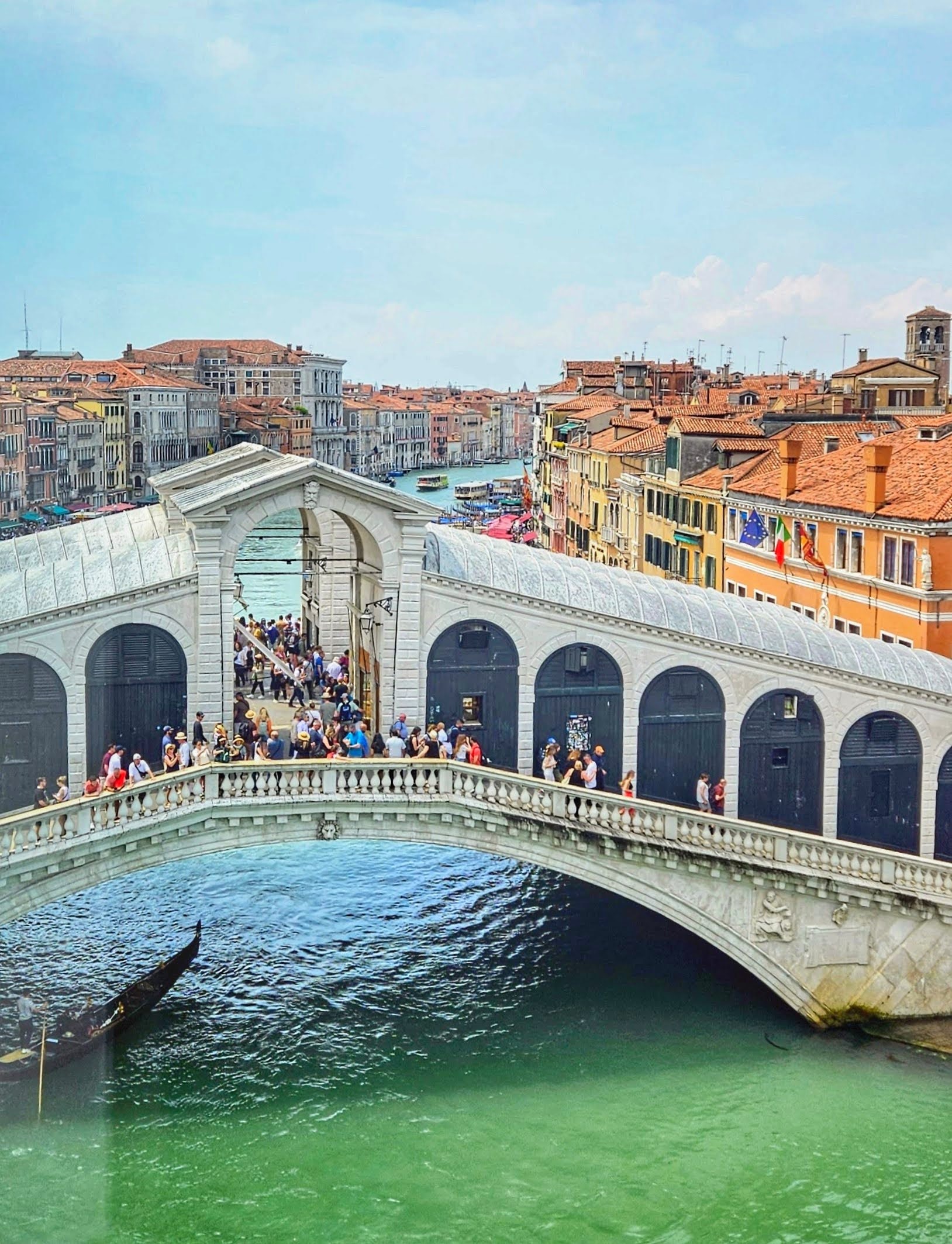
For two days I wandered Venice, ate octopus salad, drank good coffee and wine, visited an art gallery, admired the architecture and avoided other tourists. Venice is far busier than when I was last here, decades ago, but the canals are cleaner – mostly. I missed (by a day) the fluorescein spill (a chemical used to detect underwater leaks) that turned the canal near the Rialto Bridge fluorescent green, although I think some evidence still remained.
The real reason I was in Venice, however, was to do a week of easy, flat cycling from Venice to Mantua along the Po River Valley. Sleeping on a boat at night and cycling during the day, I hoped to see the quieter bit of this part of Italy. It all began on Guidecca, one of the outer islands comprising Venice. Meeting at our boat, moored on the far side of the island, we were a group of 17. (Not large but large enough to lose people on the first day while walking through tourist-laden Piazza San Marco).
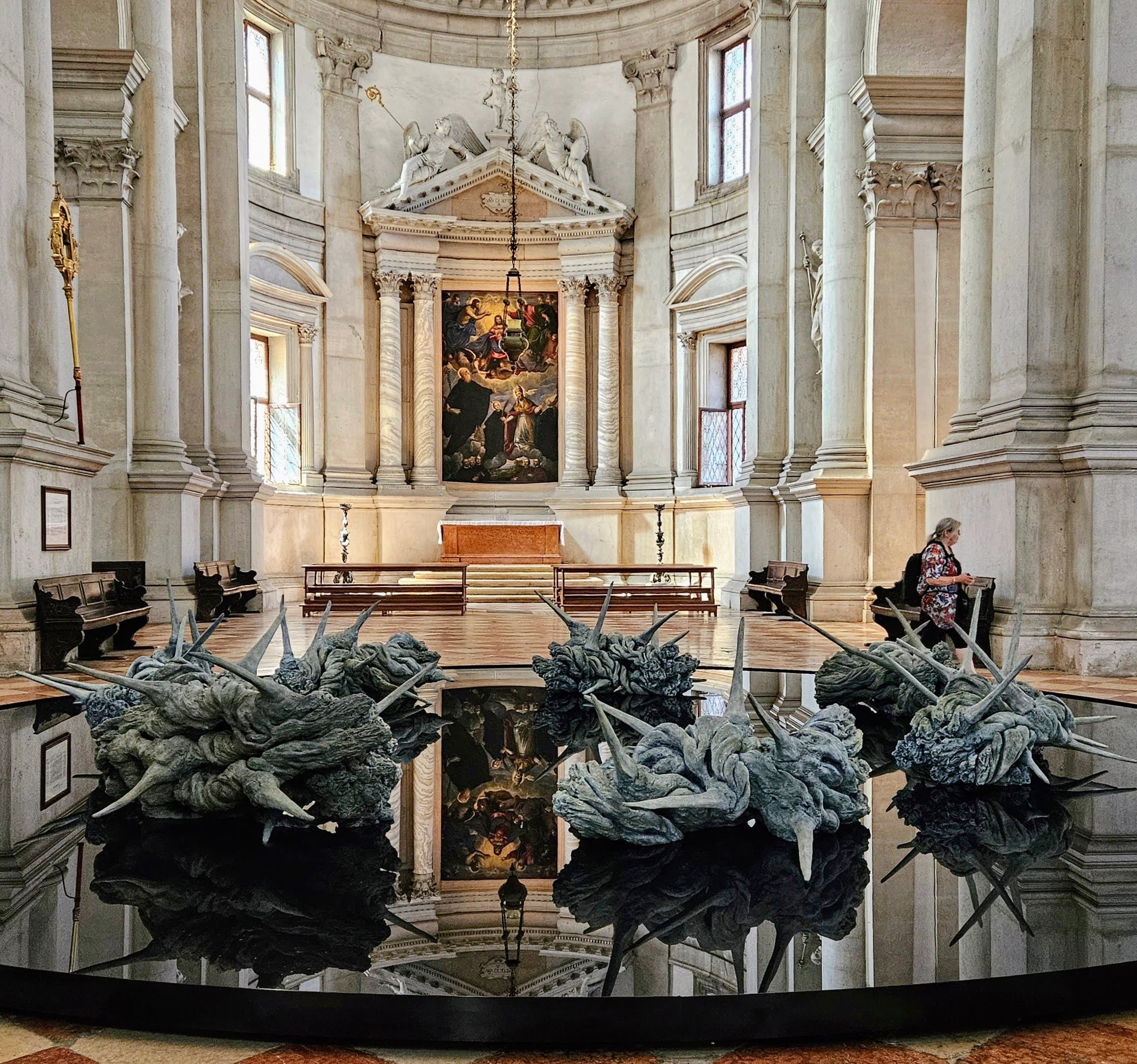
On San Giorgio Maggiore island, we climbed the church bell tower for a view of Guideccca but the highlight here for me was the Crown of Thorns, a bronze sculpture by Helga Vockenhuber that was on exhibit in this 16th century church. It sat in a shallow, black, dead flat pool of water. The reflections of the church were so remarkable it was easily mistaken for a mirror or a piece of polished black marble and many in our group either missed the beauty of the water around the sculpture or, like me, almost stepped in it.

I’ve been on cycling trips before, about a dozen, from easy to moderately difficult, from a group as few as 6 to upwards of 20 and this, as with all tours, was a diverse collection of personalities, cultural backgrounds, expectations and reasons for being there. Group travel is like that and while I mostly travel solo, when I do join a group I gain a renewed respect for the guides of these adventures.
We had a knowledgeable, friendly, soft-spoken and polite Italian guide leading our group, and it later became apparent that we also had a wannabe guide. One who felt qualified to expound on and/or correct things mentioned by the real guide. Second guide assumed his place, whenever possible, beside real guide at the front of our loose, non-performing peloton. Although neither Italian nor living anywhere near Italy, he was happy to offer advice and instruction to real guide on all things Italian.
Also, as often happens on group holidays, there were a couple of whatevers, those for whom learning about the past gets a shrug but inquiring about the present is of great importance. On our first day of cycling we stopped by a building to hear about its history and unique architecture. The building now functions as a hotel and the whatevers, quickly dismissing real guide’s discussion, asked instead the price of staying at the hotel, the number and quality of the rooms, how many stars the hotel might have and, oddly, the name of the hotel, which was displayed in big block letters right across the front of building.
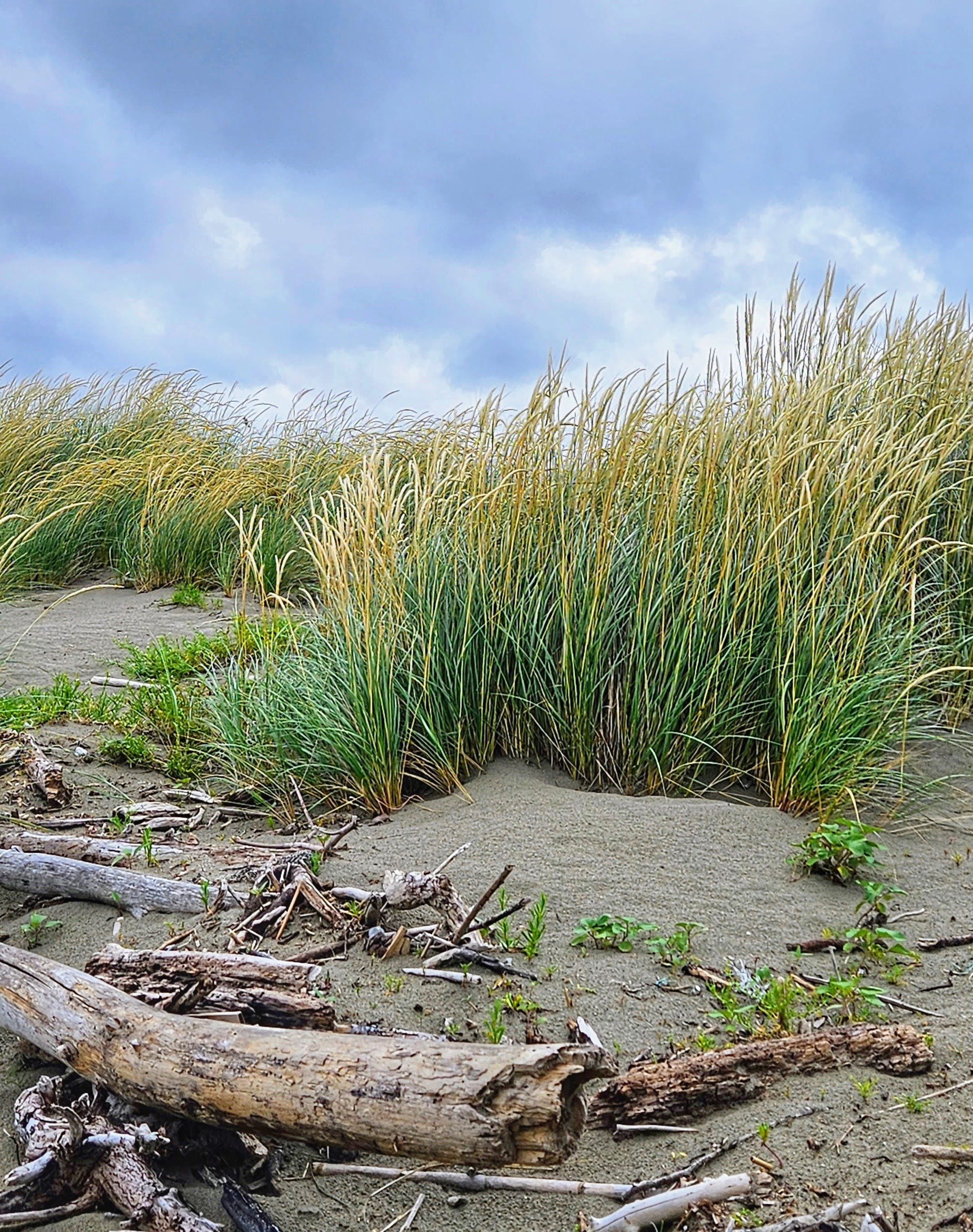
We cycled the barrier islands of Lido and Pellestrina that offer Venice protection from the full force of the Adriatic Sea. I was happy to find that, here, we also seemed protected from the full force of the tourists in Venice. We rode the length of the islands, past empty beaches, quiet villages, clam boats and poppies and overnighted in a quiet spot at the far end of Pellestrina. The beauty of sleeping on a boat that moves to meet you at the end of each day is that it allows point-to-point cycling without the hassle of packing up each morning. It’s a very easy way to do some active travel on flat river valley routes, making it a leisurely and enjoyable ride.



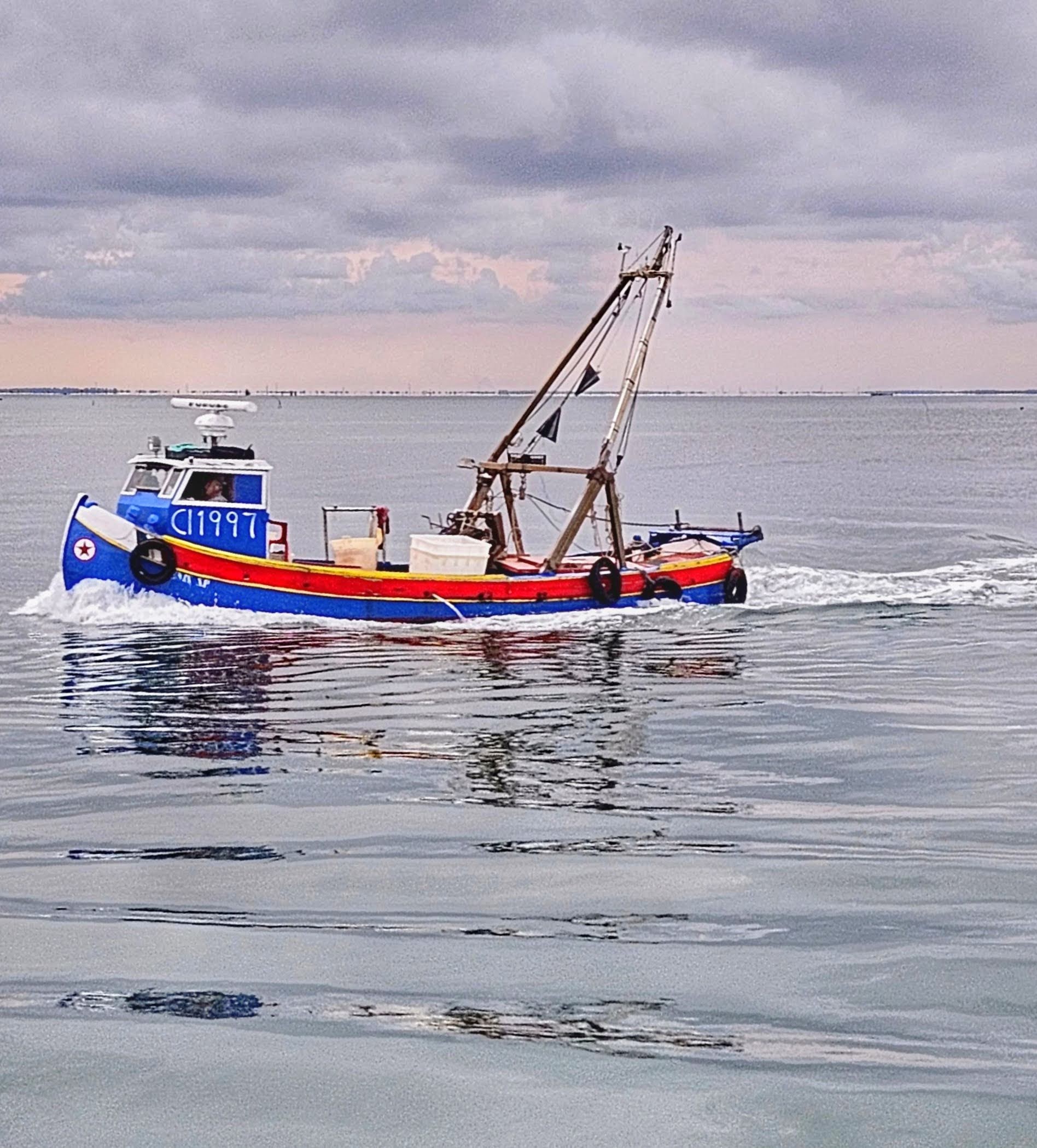
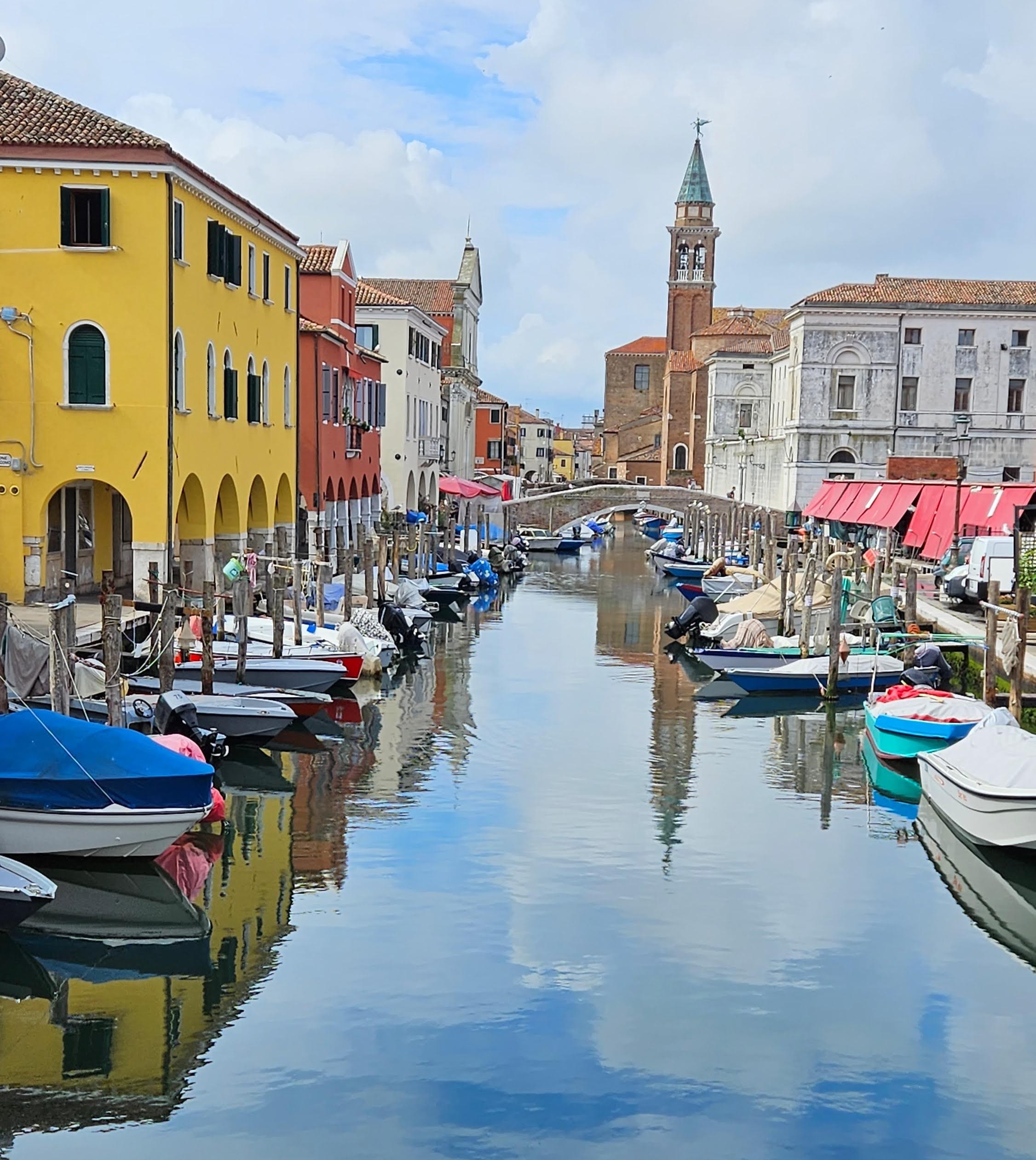
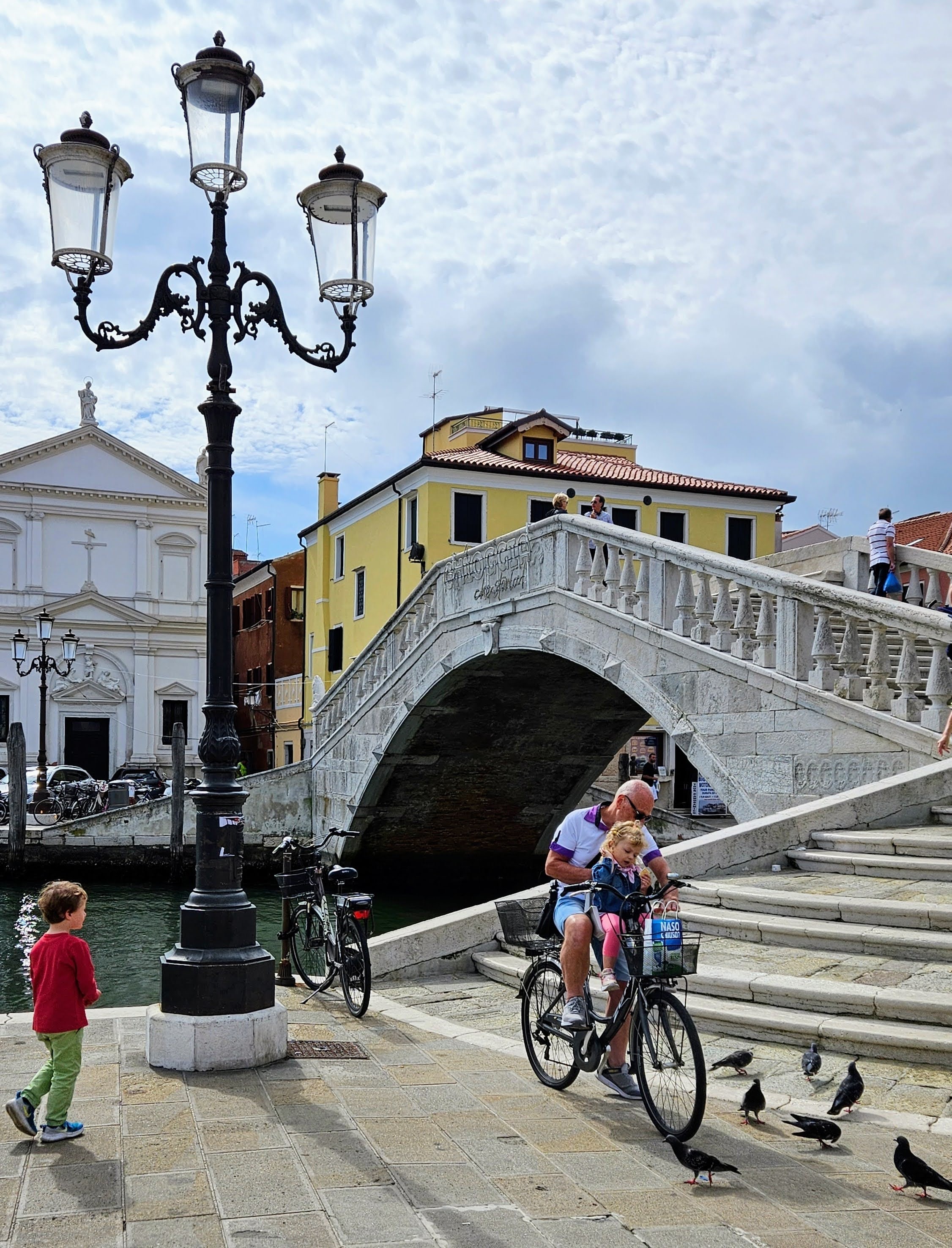
Then it was on to Choggia, a wonderfully quiet fishing village with a main trunk canal and branch canals in both directions, giving it the nickname Little Venice. The fish market at the harbour offered second guide an opportunity to try his hand at marine species identification. Real guide seemed better versed in this regard so I listened to him.

Cycling through the Po Delta Nature Reserve which is UNESCO-recognized and the second largest wetland in Europe, raised my hopes of spotting a lot of wildlife – specifically birds. The huge wetland has lagoons, pine forests, coastal dunes and over 300 species of birds. I saw only a couple of flamingos and/or egrets off on the horizon but such is the way with bird spotting, it can be hit or miss, and for me it’s usually miss. Not because the area is devoid of birds but because I am hopeless at spotting them. Someone might point out a bird that didn’t move for an hour and I’d scan the branches and leaves in frustration, eventually pretending to see it so as to lower my stress level and hoping that we might move on. I did spot the lovely beach though when we stopped for lunch. It was devoid of wildlife, in fact devoid of any life at all.


We ate our boxed lunches here and sat for a long time while real guide received advice from second guide on the path and speed of an approaching storm. That’s when the impatient, quiet woman next to me confided that she was antisocial and came here not sit and talk to others but to cycle. I might have suggested she make her concern known to the weatherman but that would have meant social interaction and further advice.
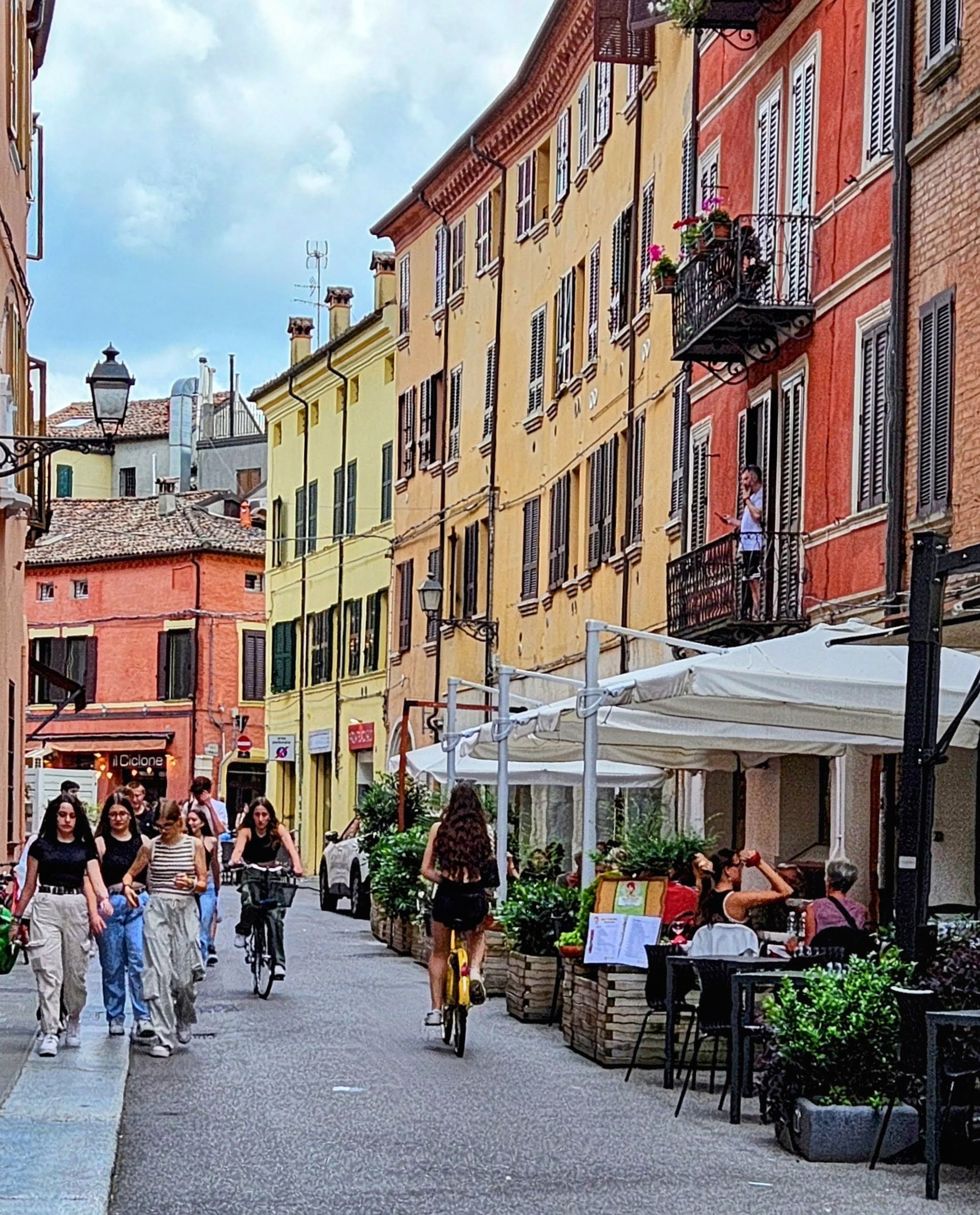
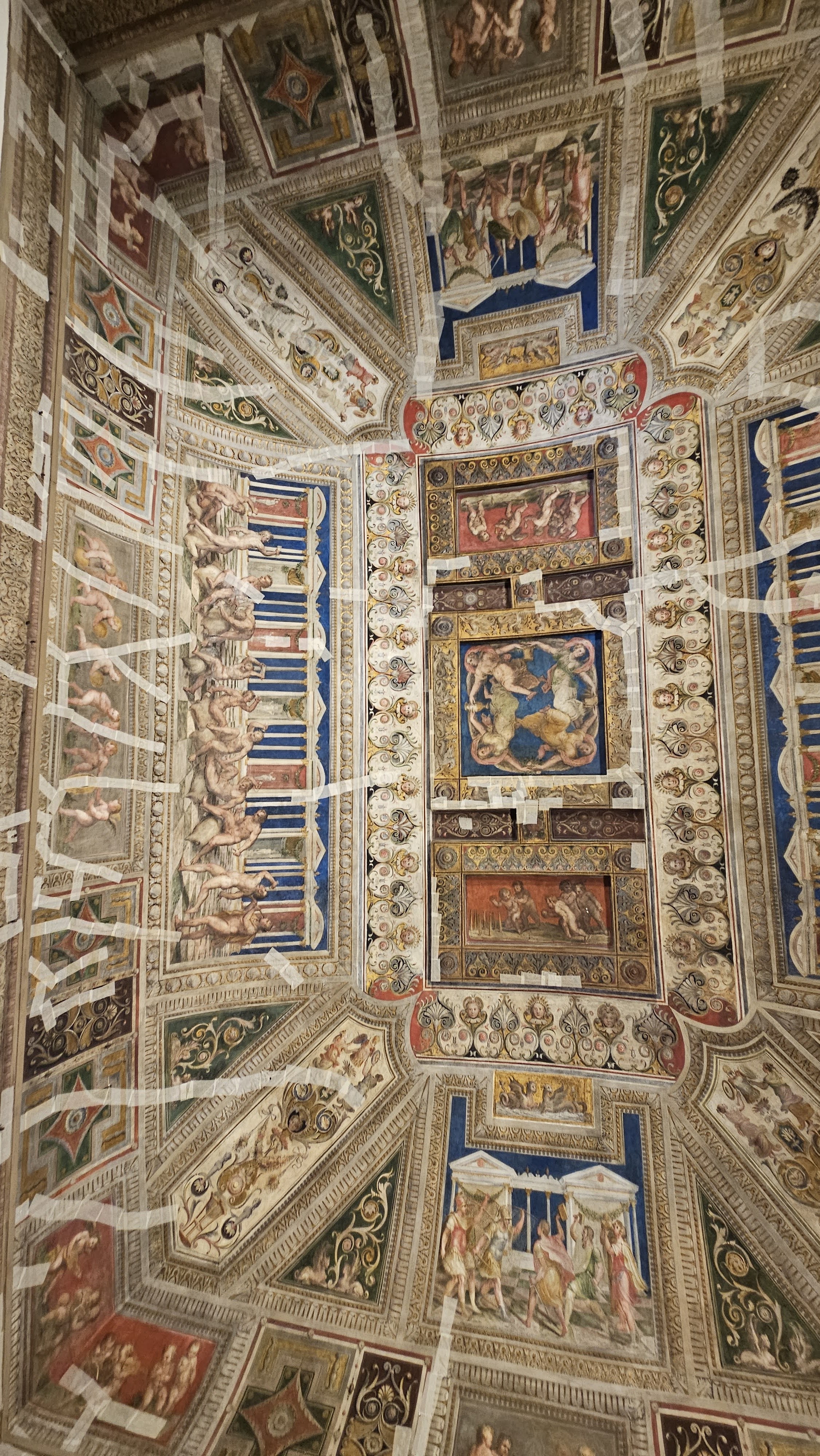
We also cycled on the beautiful Destra-Po cycleway on 10m high levees built to contain the Po River. It is one of the top three Mediterranean rivers when it comes to water discharge, along with the Nile and the Rhone. We rode through picturesque farmland to the busy town of Ferrara. In Ferrara, we toured the 14th century castle, Castello Estense, with its beautiful frescoed ceilings, now MacGyvered together with masking tape after the 2012 Emilia earthquakes. Well not masking tape exactly but tape just the same. It was a temporary fix, 11 years ago.
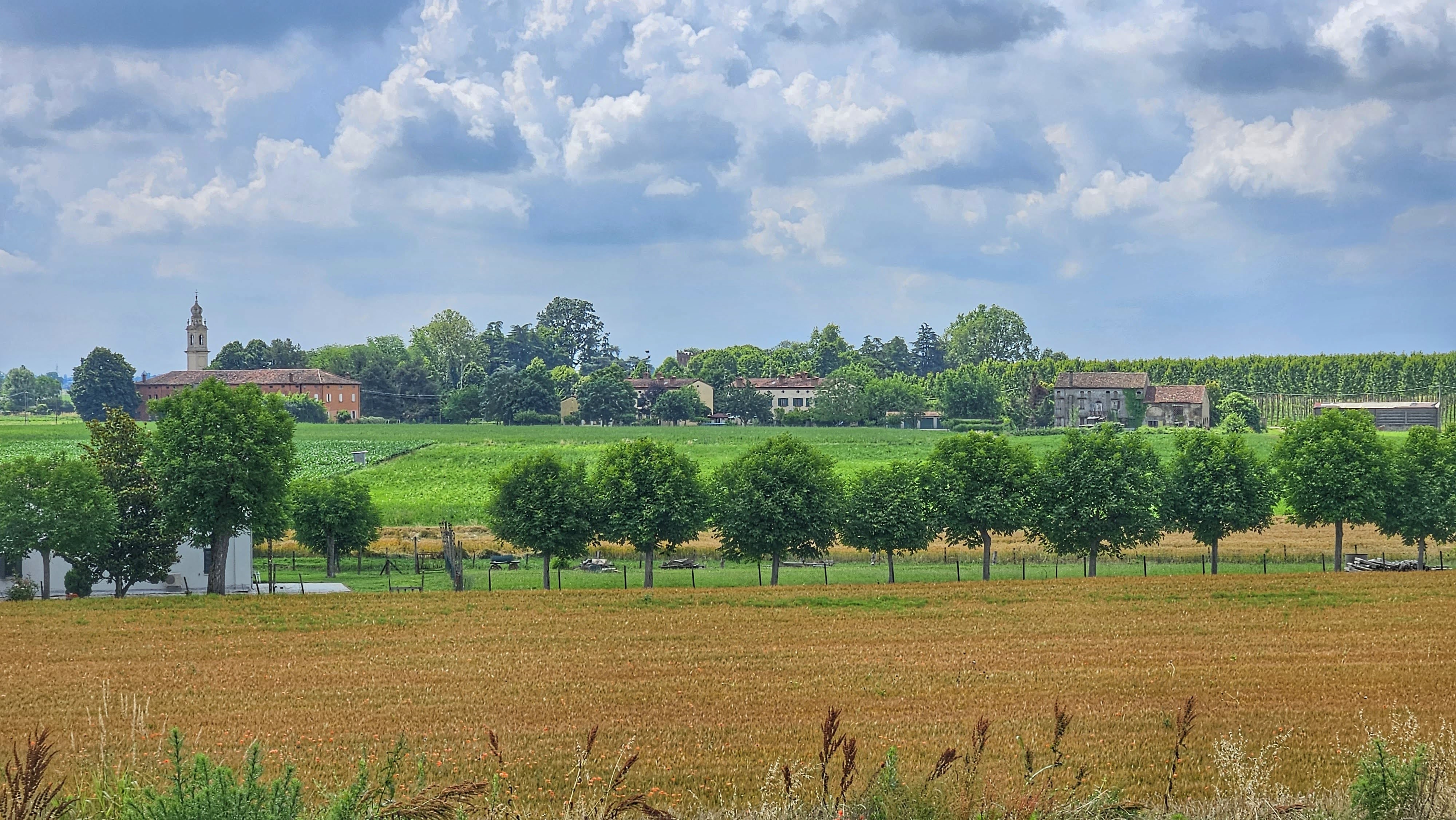

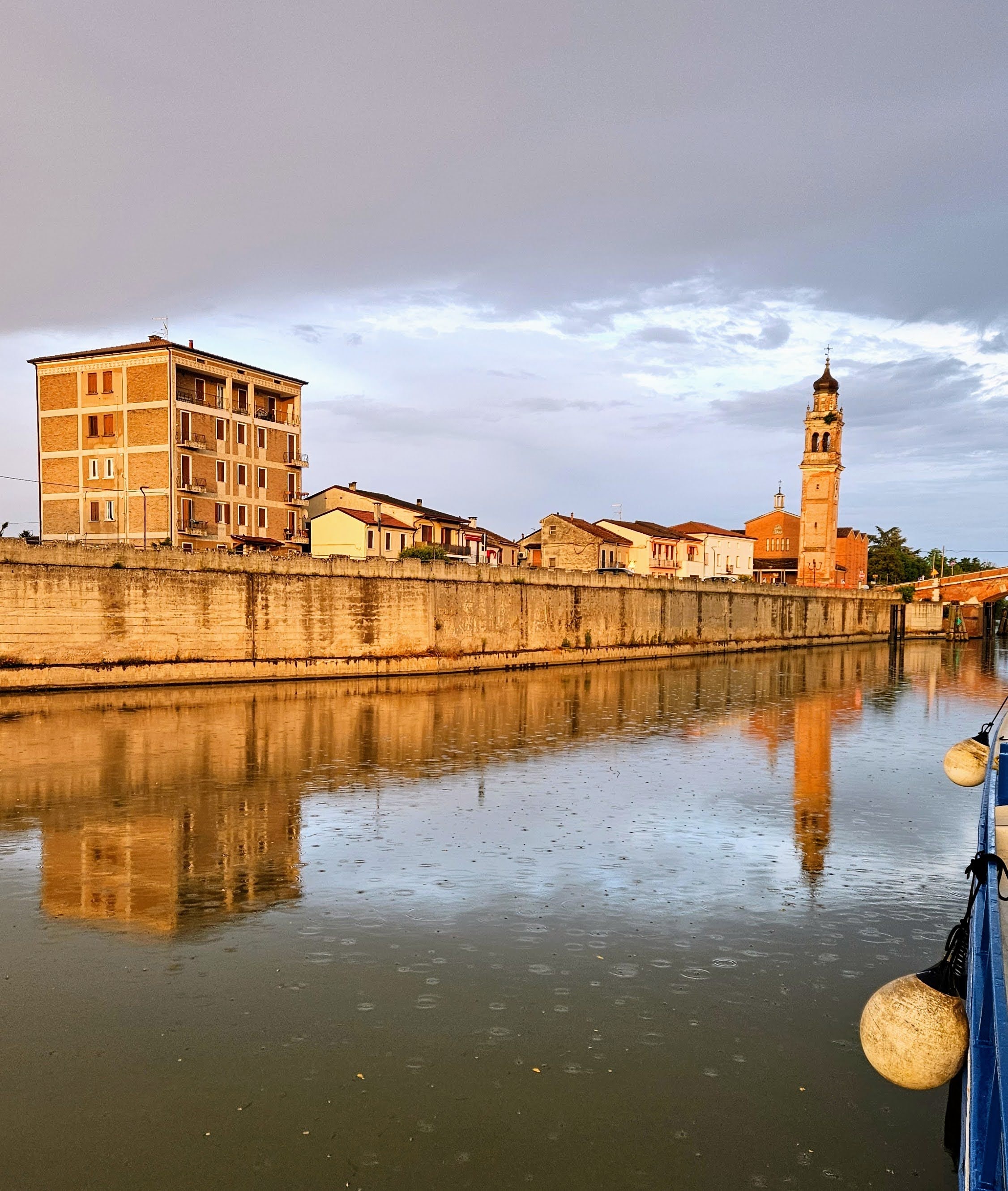
It was a hard luck kind of day. There was a delay right at the start with a jammed wheel, real guide had to endure an Italian history lesson by second guide while pedalling the cycleway, a slide-out on some gravel occurred on a tight corner and a bus clipped the handlebar of Antisocial’s bike in Ferrara which created some angst. Also in Ferrara, I left my wallet in a pouch on my bike (no hard luck there – just my own stupidity) but luckily it was still there when I returned, and as a fitting end to the day it began to rain. Back on our boat in the quiet village of Zelo, a bbq, good wine and the sun’s afterglow that evening made up for it all.

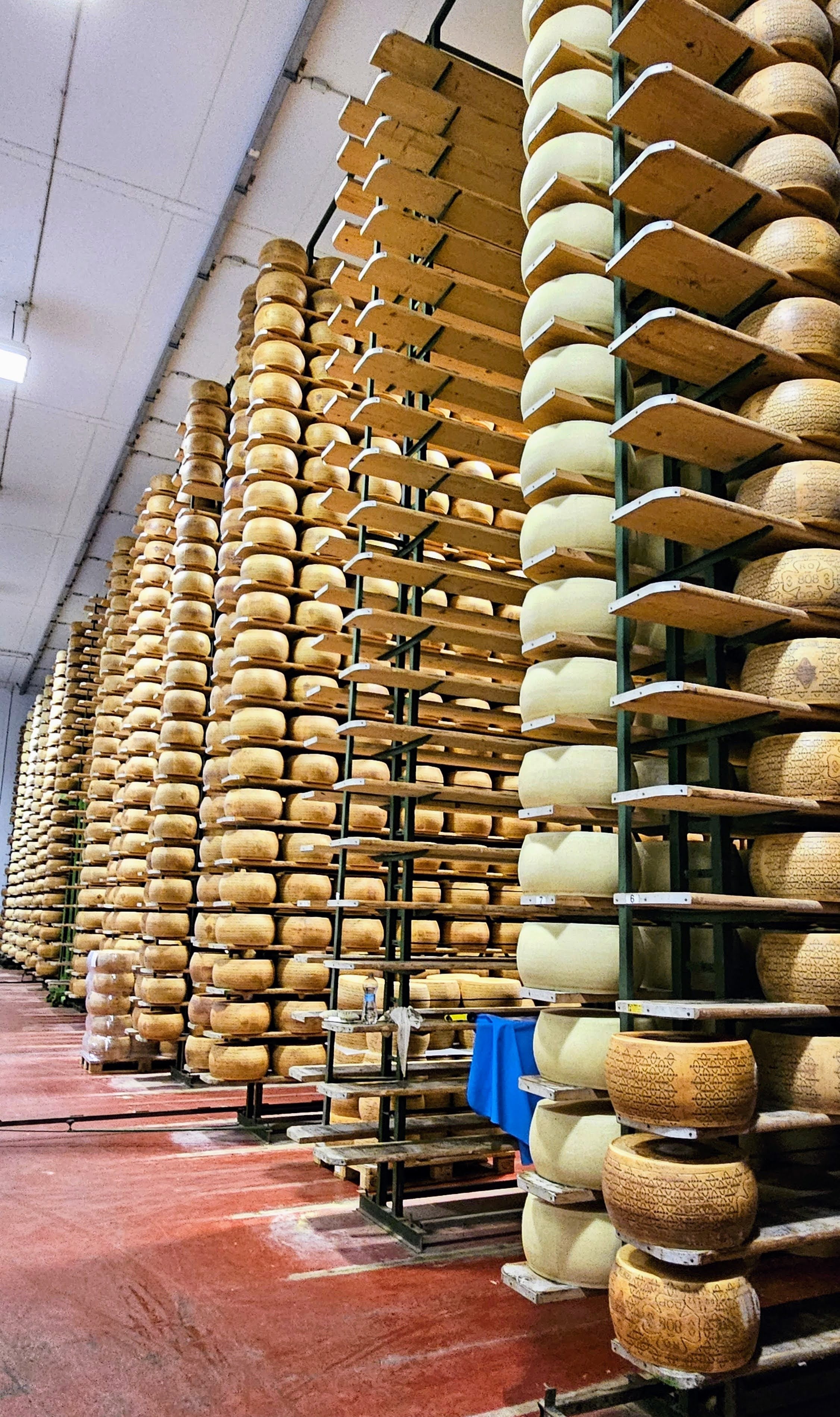
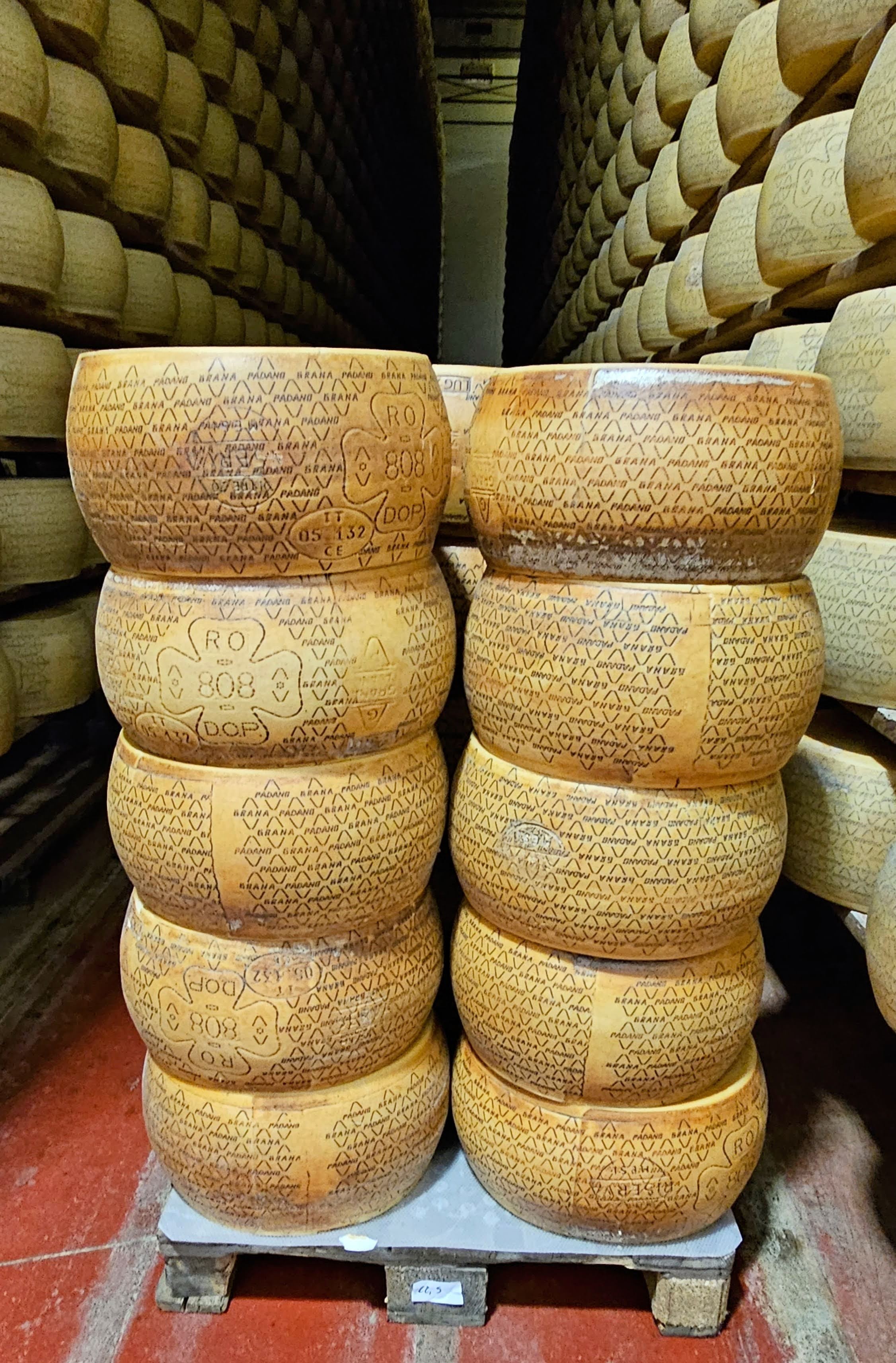
A cheese factory was our next stop, where we learned how to make delicious Grana Padano cheese. So easy! Settle some milk, skim it, feed the cream and fat to pigs (optional), add rennet and lysozyme and wait a few years. I always love an easy lunch recipe – going to give it a try. We ate as much as we wanted, washed it down with red wine and then climbed back on our bikes, all before noon. Best day yet.
Then it was on to the merry-go-round museum in Bergantino. In the early 20th century Bergantino was very poor, particularly after the crash of 1929. Two clever bike mechanics were enthralled by an electrified merry-go-round at a local fair and so built a carousel with a small race car track on which electric cars could be driven, a Monza circuit racetrack miniature. During that time, horses were out and the car was in but few had access to a car. This made the little racetrack ride an instant moneymaker. Over a hundred families in the area followed suit and soon there were close to 38 dream factories (as they were called) designing and building amusement park rides. Today, carousels, roller coasters, bumper cars, ferris wheels, spinning rides and free-fall thrill rides are designed and built here. The museum honours the fascinating history of travelling fairs and amusement parks.

Our last day was in Mantua, a town with stunning architecture and an interesting history. On a late day walking tour we heard all about it. We’d learned a lot about the interesting history of this part of northern Italy in the last week. Not sure if the whatevers found it interesting, I couldn’t tell. There had been a lot of concern about the present – what’s next? where to? for how long? when shall we meet? oh, and when and where do we eat?
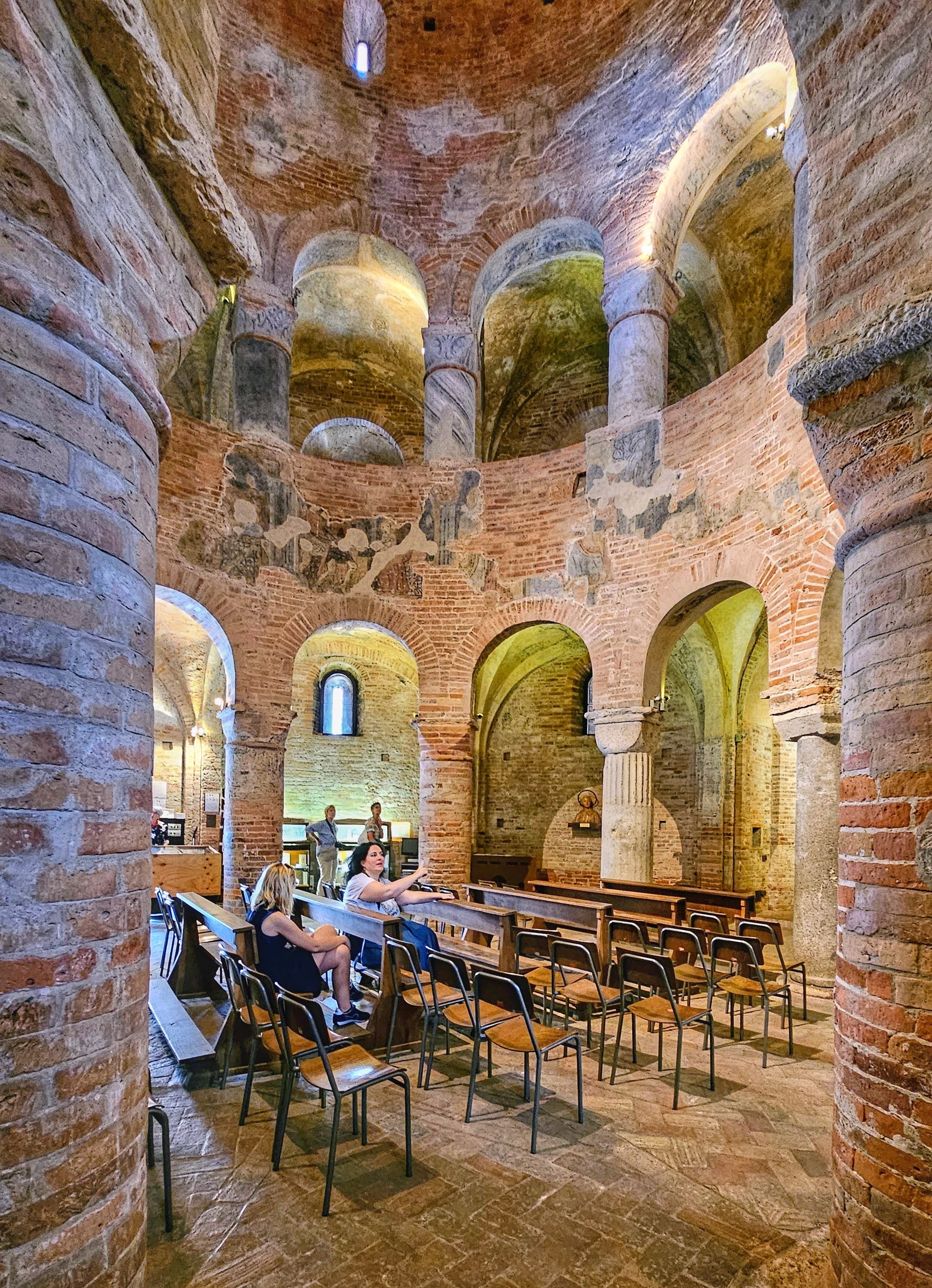

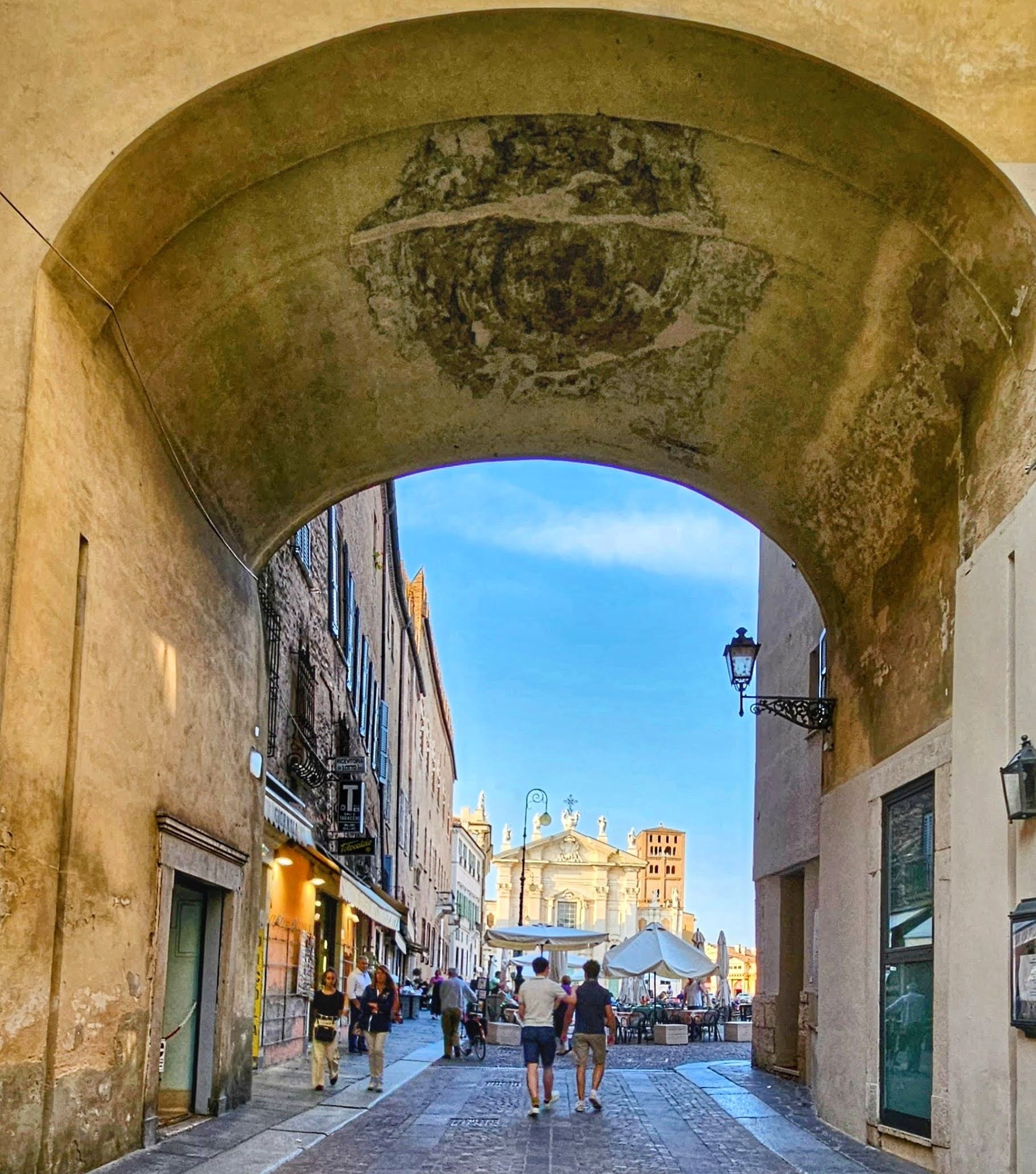
Speaking of eating, on our first day in Mantua, we all wondered where to eat. We were on our own for dinner that evening. The group dispersed but not surprisingly, knowledgeable second guide nabbed a few of them and delivered a second walking tour while escorting them to the best place to eat. Real guide stayed on the boat (probably for a bit of respite) and my cabin-mate and I absconded and hid in the shadows so as not to be nabbed. Antisocial disappeared instantly and told me later that she got lost looking for the hotel she had booked for the following night.
On our last day, we rode around the lakes of Mantua and enjoyed a final dinner together where much praise went to the chefs on the boat who had prepared Michelin-quality meals each night. It had been a good week with this quirky cast of characters (of which I am certainly one in their eyes) and so our excellent (and long-suffering) guide must also be praised.
As I climbed onto the train back to Venice, I recalled something interesting I had learned about Mantua. Mantua has two cathedrals to guide the masses to heaven. The real cathedral, Cattedrale di San Pietro Apostolo is the seat of the Bishop. It was built in 6 years between 1395-1401. Second cathedral, Basilica di Sant’Andrea Apostolo is a co-cathedral. But second cathedral is trying hard to be the real cathedral (Hmm…double-guided dejà vu).


It’s doing a good job – it’s stunning inside but I would expect nothing less since it took 328 years to complete. It was started in 1472 and completed in 1790! And so ended the bike trip.
Pedal on!

 eudaemonia musings
Another great blog. I enjoyed your description of the characters on the tour, especially wannabee guide :-).
LikeLiked by 1 person
Thanks Lee, lots of fun and very interesting.
LikeLike
Great writing as always Anne. Love your descriptions of your travels & characters. It’s almost like being there.
Thanks for Sharing.
LikeLike
Thanks very much John. Yes, an enjoyable trip.
LikeLike